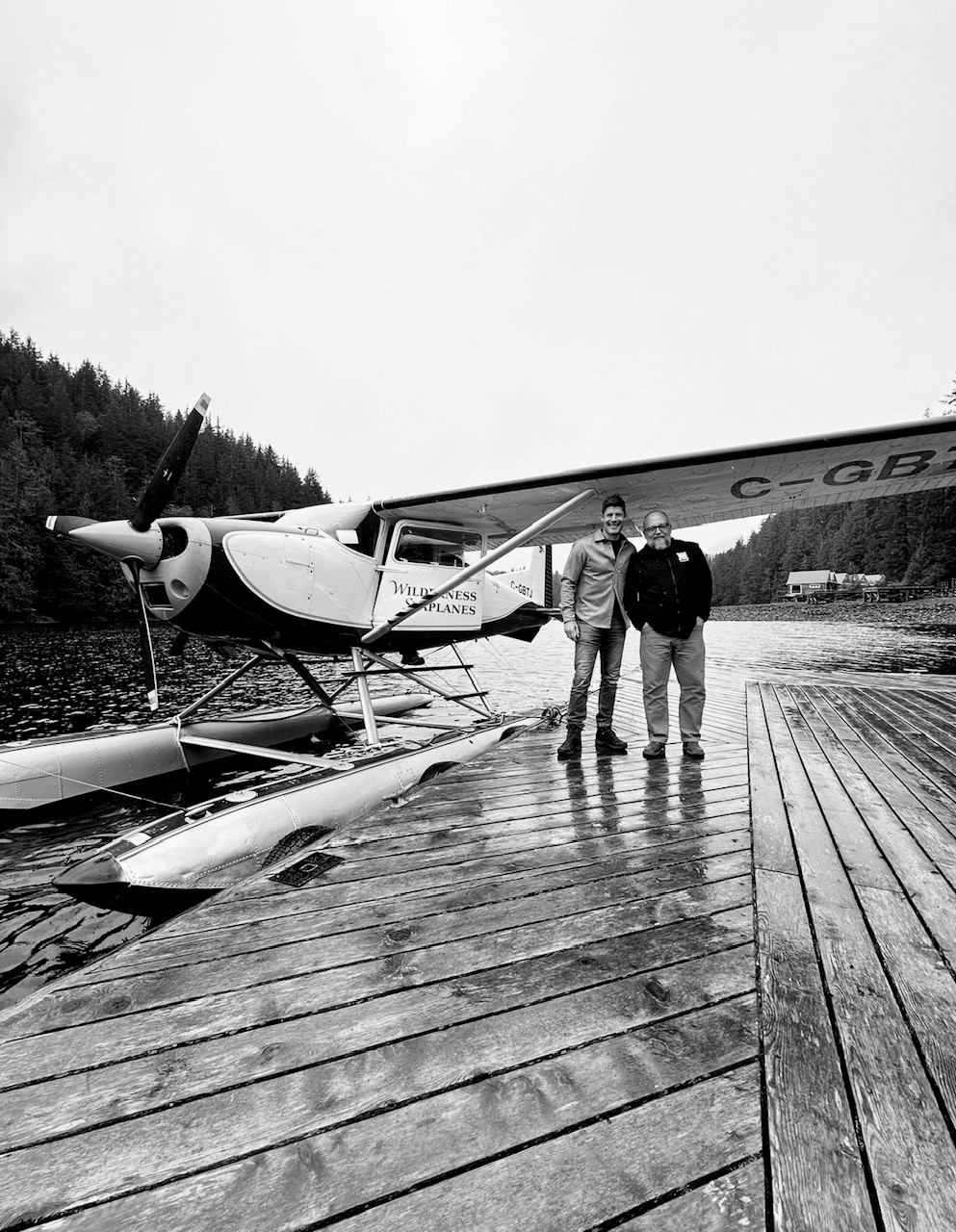
In a predictable world, I live for moments and experiences that are spontaneous. Unscripted. Unexpected. Profound. When it happens, you can feel it. The air in the room shifts. The conversation deepens. Something real shows up.
Those are the moments worth remembering.
I had one years ago inspired by friend and legend Ian Chisholm (Chiz to those who know him well).
Chiz isn’t your average leadership guru. He drives a kick-ass Defender named after a Spanish horse named Argento. He’s lived in Canada, New York, and Scotland. He recently took a 6 month sabbatical that ended with his daughter Rose in a helicopter over the African Sahara. He notices, inspires, writes poetry and eats paradigms for breakfast.
Chiz is also one of the most thoughtful people I know when it comes to coaching and mentorship. He leads Roy Group Leadership and recently wrote and published a book about mentorship called Quiet Champions.
One line from the book sticks with me:
In a world where people are quick to label themselves, I appreciate that perspective.
The special moment I’m thinking about happened during a session with a group of leadership students from the University of Alberta’s Peter Lougheed School of Leadership.
We met at a small café near campus.
I had invited Ian along somewhat on a whim. He asked what the session was about. I told him the truth:
“I’m not entirely sure. But I’m a volunteer on the board and I just like spending time with the students and learning from them.”
The students arrived: bright-eyed, thoughtful, curious, full of potential and excellent questions. Exceptional.
After a round of flat whites and introductions, I asked Ian if he would share a few thoughts on leadership.
He did what great mentors do. He didn’t give advice. He told a story.
He took us to the Isle of Skye, and to a period in his life when he stepped into a leadership role that put him in over his head. And when a student asked him how he navigated the situation, he said, quite simply:
"I leveraged my unique gift".
The idea that each of us has something we do exceptionally well, something that creates disproportionate value, but that’s often hard to see it in ourselves.
So he suggested a question.
Ask someone you’ve worked with:
“Tell me about a time when I was adding real value. What was I doing that made a difference?”
Then listen carefully.
What happened next is hard to fully describe.
The students began answering that question for each other. And the room changed. They saw things in each other that hadn’t been articulated before. There was honesty. There was depth. There were a few tears. (But only from Ian and the students… I haven’t cried since Wayne Gretzky was traded.)
But more importantly, there was clarity.
You could see people recognizing something about themselves that had always been there, but had never been named.
We all have that. We just don’t always take the time to uncover it.
If you’re early in your career; find people who will help you see it.
If you’re further along; become the kind of person who helps others discover it. That’s what great mentorship looks like.
If you’re interested in the topic, I’d highly recommend Ian’s book, Quiet Champions, and the work he’s doing through The Roy Group.
And in the meantime, try the question. Sit down with someone you trust and ask: “When have you seen me at my best?”
You might be surprised by what you hear. Because, as Ian says:
“Our job in this world is to discover what our gifts are… and then give them away.”
And if you ever get the chance to spend time with Ian, ask him about “The Parade.”
It’s part of the story.
But that’s one worth hearing from him.